Management
Initially this page will be a compilation of three parts of old notes:
In time it will be trimmed down, reorganized, and made more succinct.
Rationale Management
References:
- Bernd Bruegge and Allen H. Dutoit, "Object-Oriented Software Engineering", Third Edition, Chapter 12
An Overview of Rationale
Rationale captures the motivation behind a decision, and may include :
- The issue to be decided
- Alternatives that were considered
- The criteria used to judge alternatives
- Argumentation for and against various alternatives
- Decisions made as a result of discussions
Rationale Concepts
Example: Centralized Traffic Control
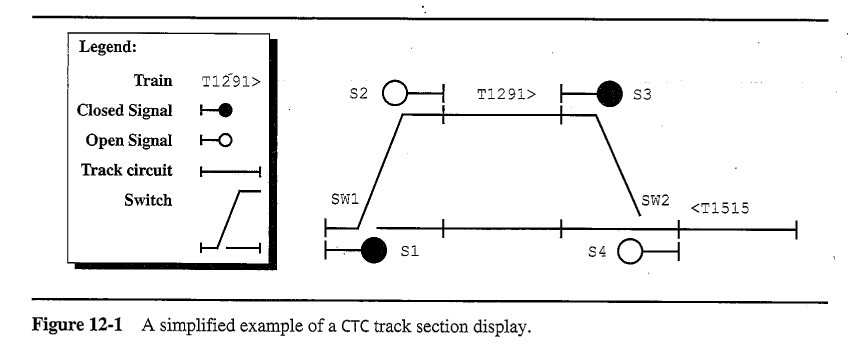
This running example is based on a centralized traffic control system for a railroad. The following figure shows the user interface from the pre-existing system:
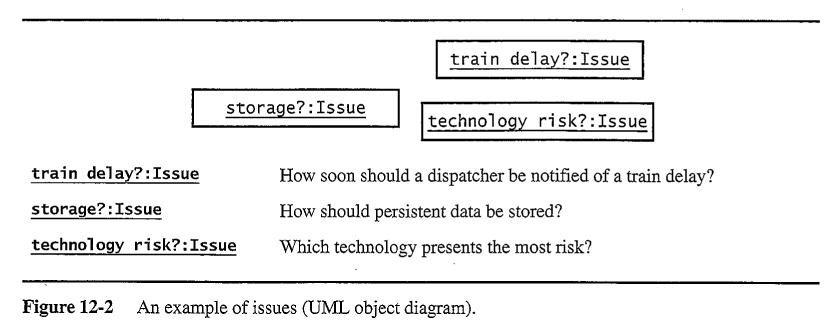
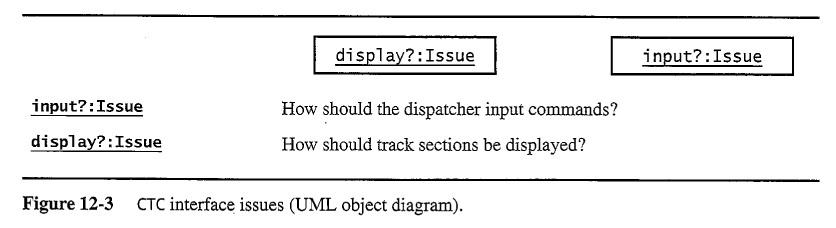
Defining the Problem: Issues
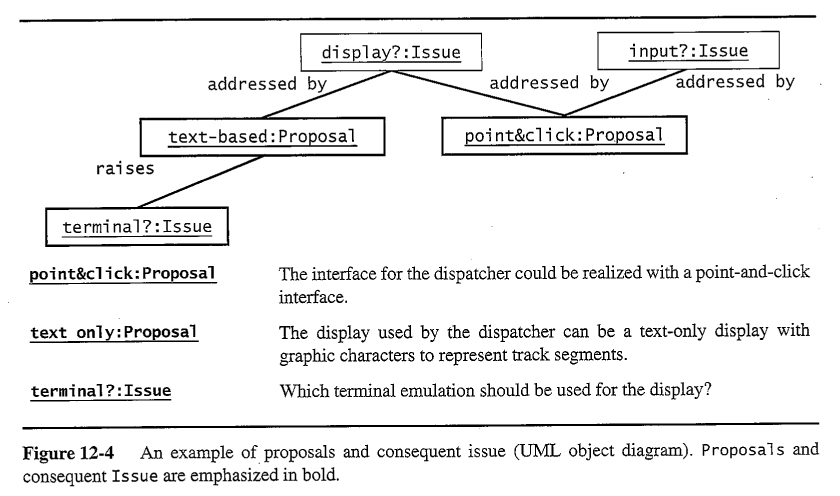
Exploring the Solution Space: Proposals
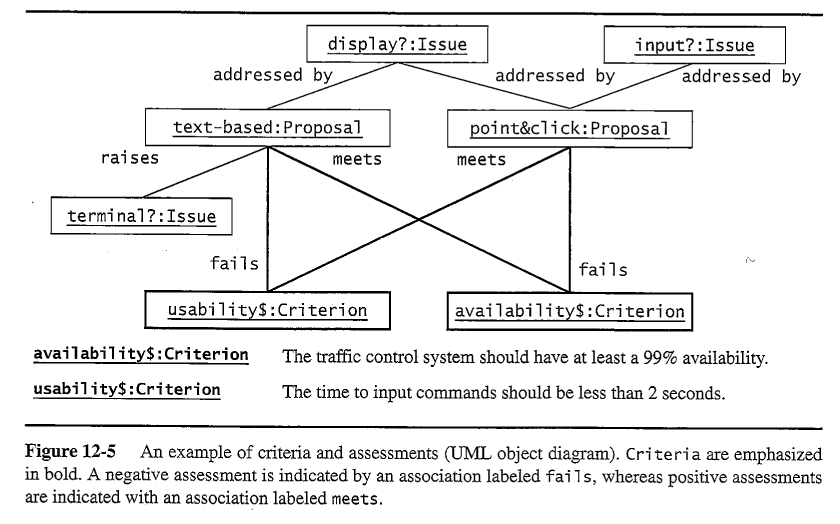
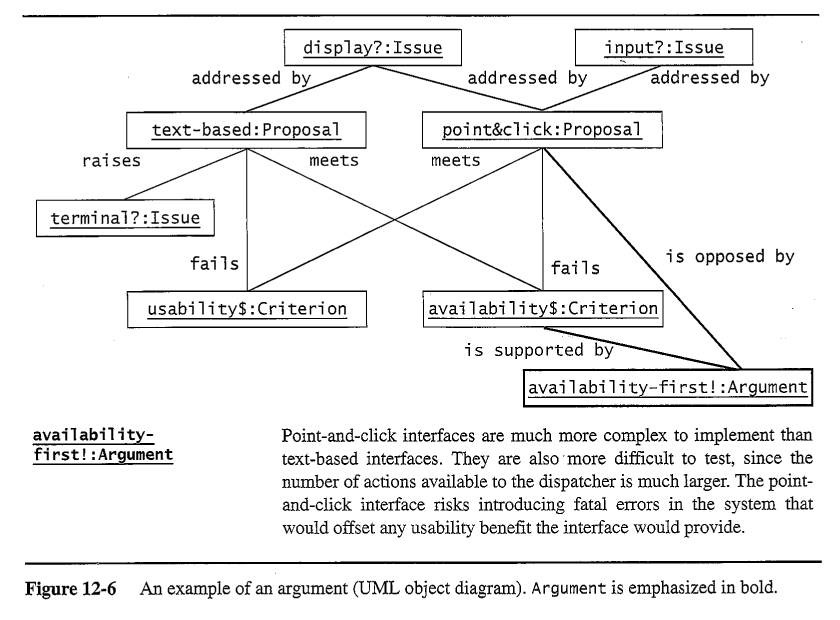
Evaluating the Solution Space: Criteria and Arguments
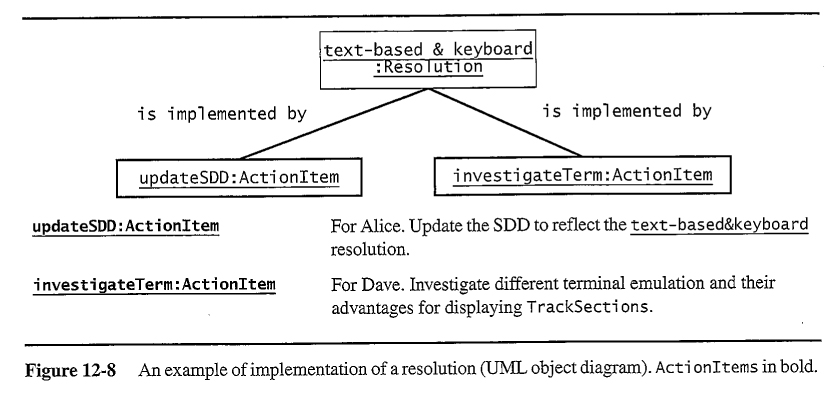
Collapsing the Solution Space: Resolutions

Implementing Resolutions: Action Items
Examples of Issue-Based Models and Systems
There are many systems that have been proposed for managing rationale, most using similar concepts, some as commercial products.
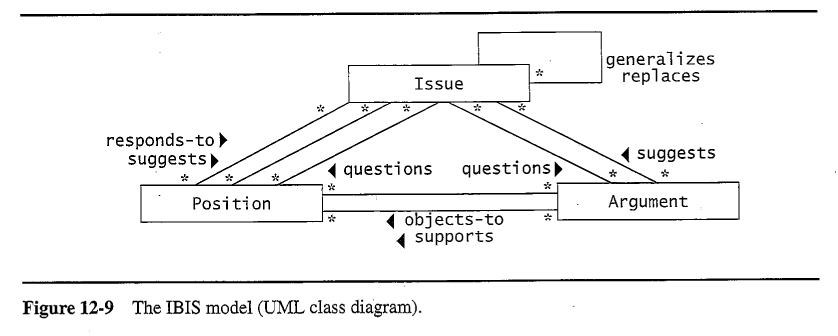
Issue-Based Information System, IBIS
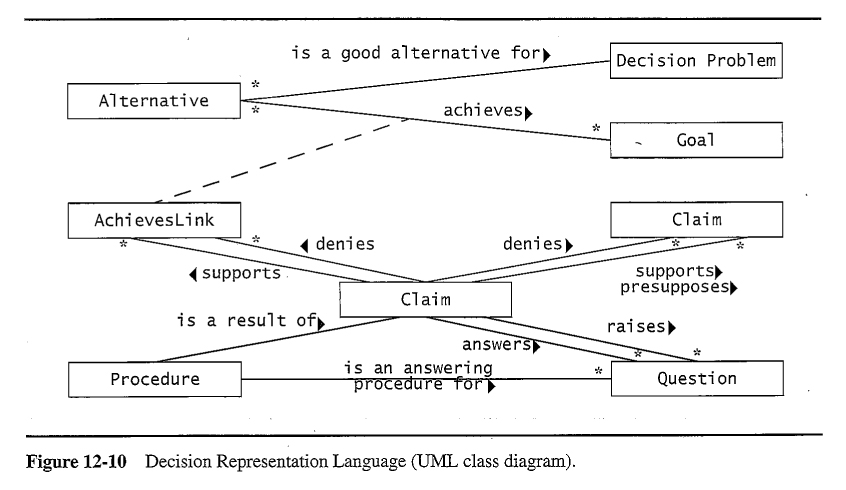
Decision Representation Language
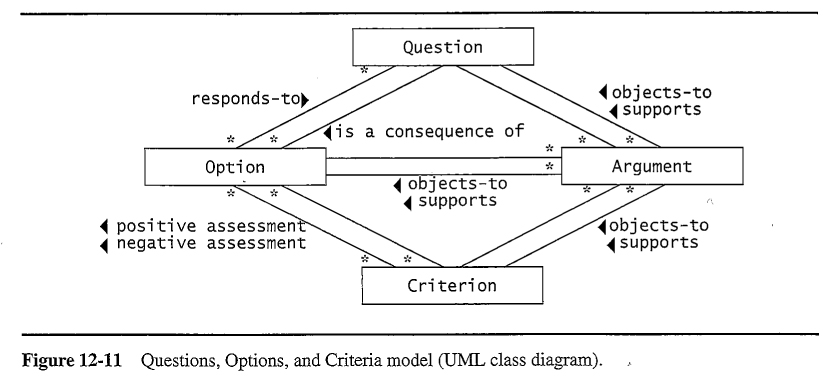
Questions, Options, and Criteria
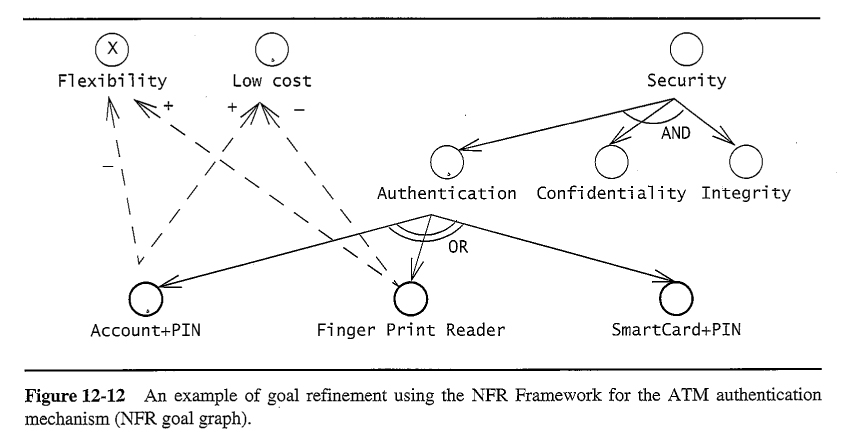
The NFR Framework
Rationale Activities: From Issues to Decisions
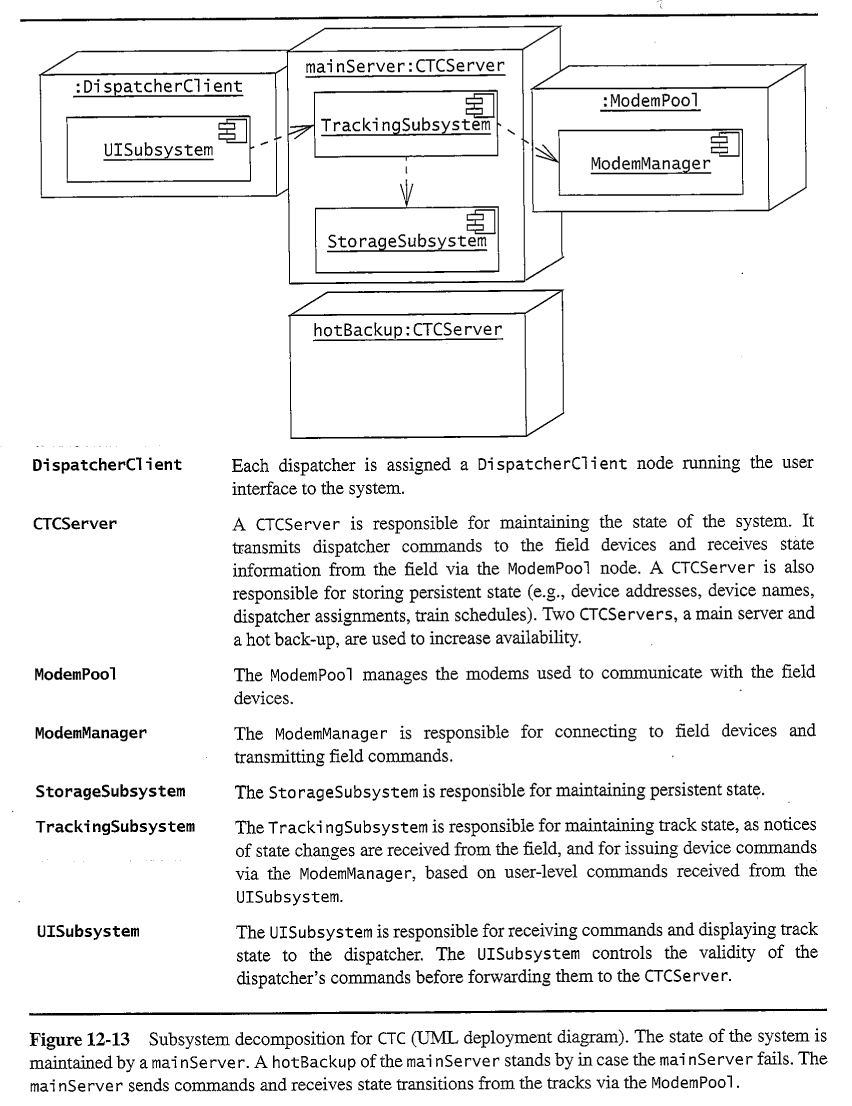
CTC System Design
Capturing Rationale in Meetings
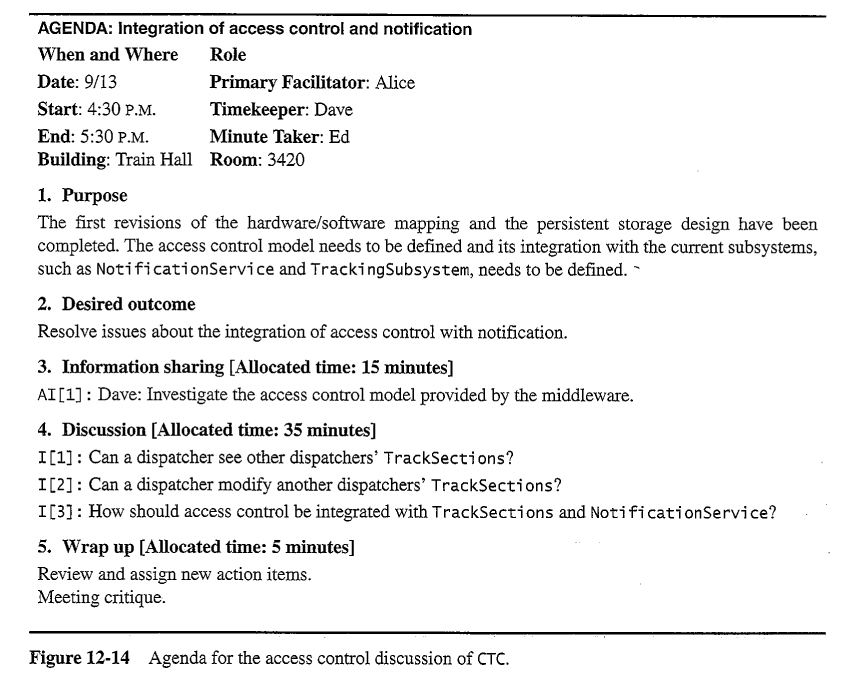
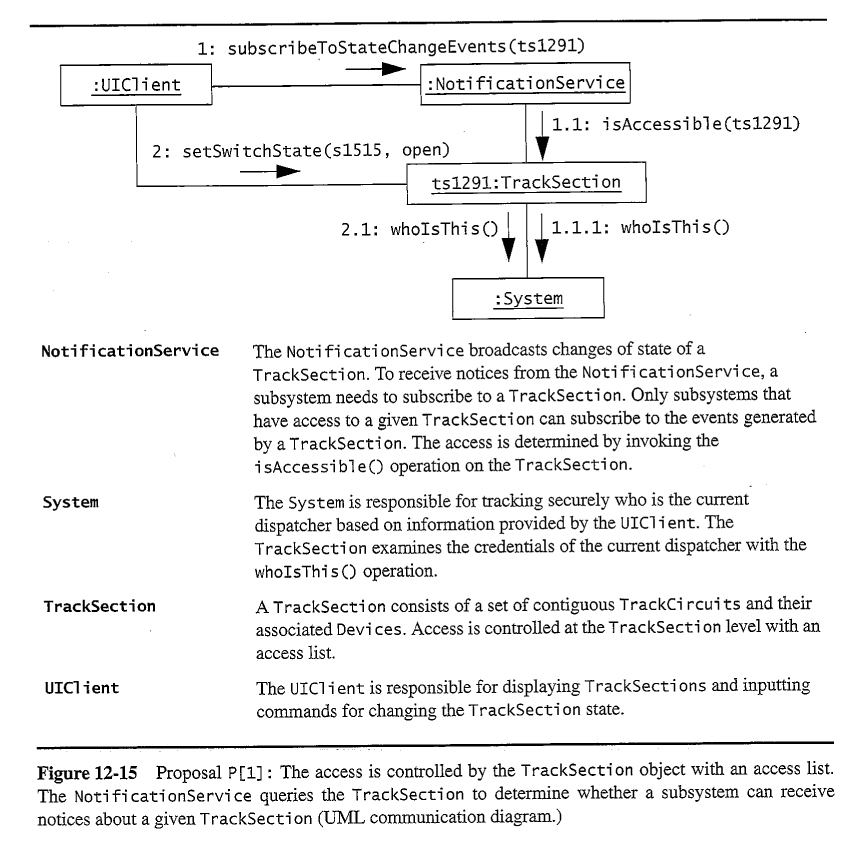
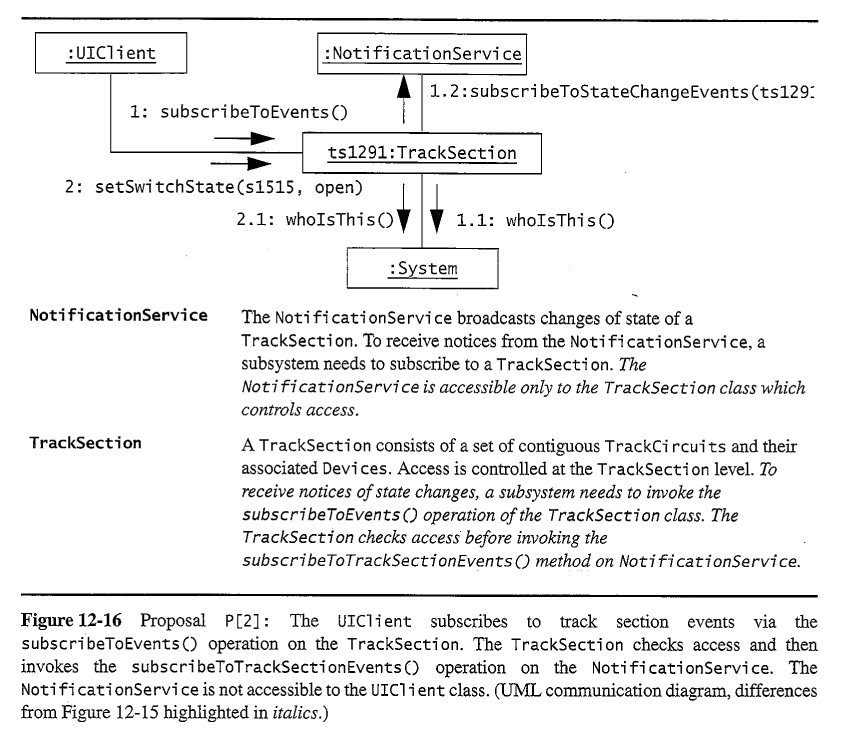
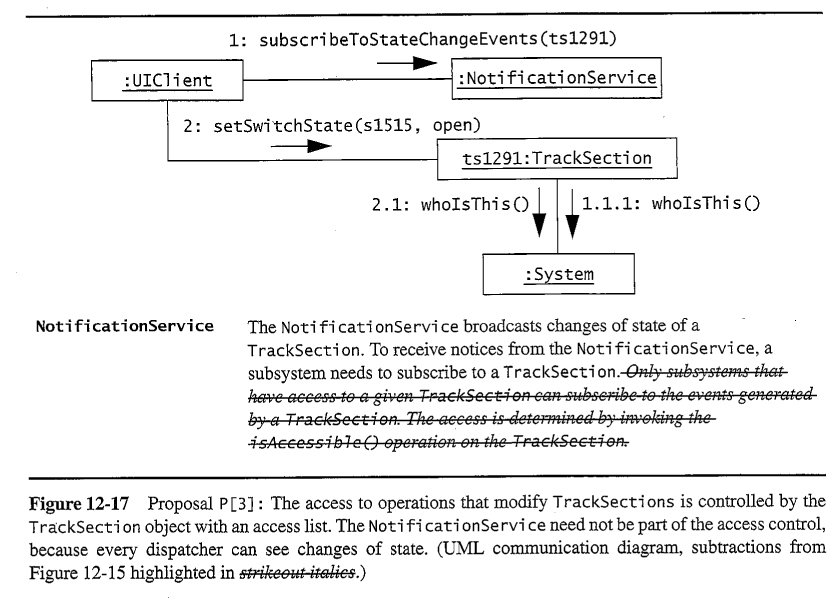
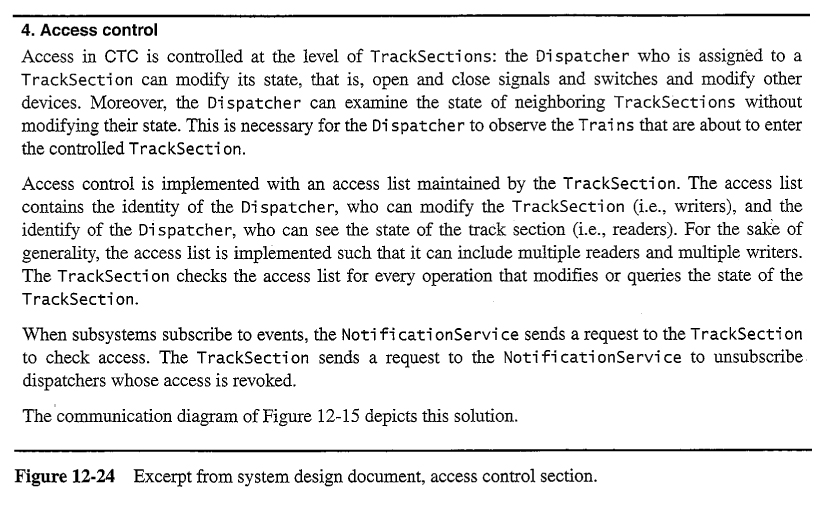
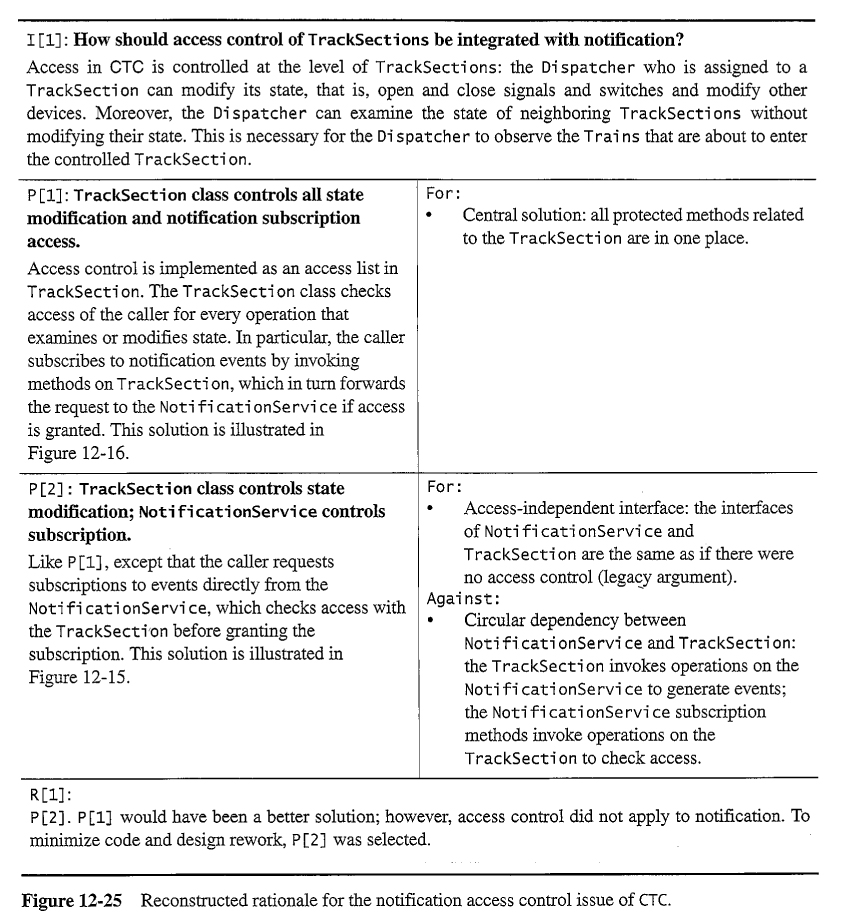
The agenda for this meeting calls for the discussion of three issues, key of which is determining the access control policy, and how it is to be integrated with the notification service. ( The latter allows an operator to see what is happening on a given section of track. )
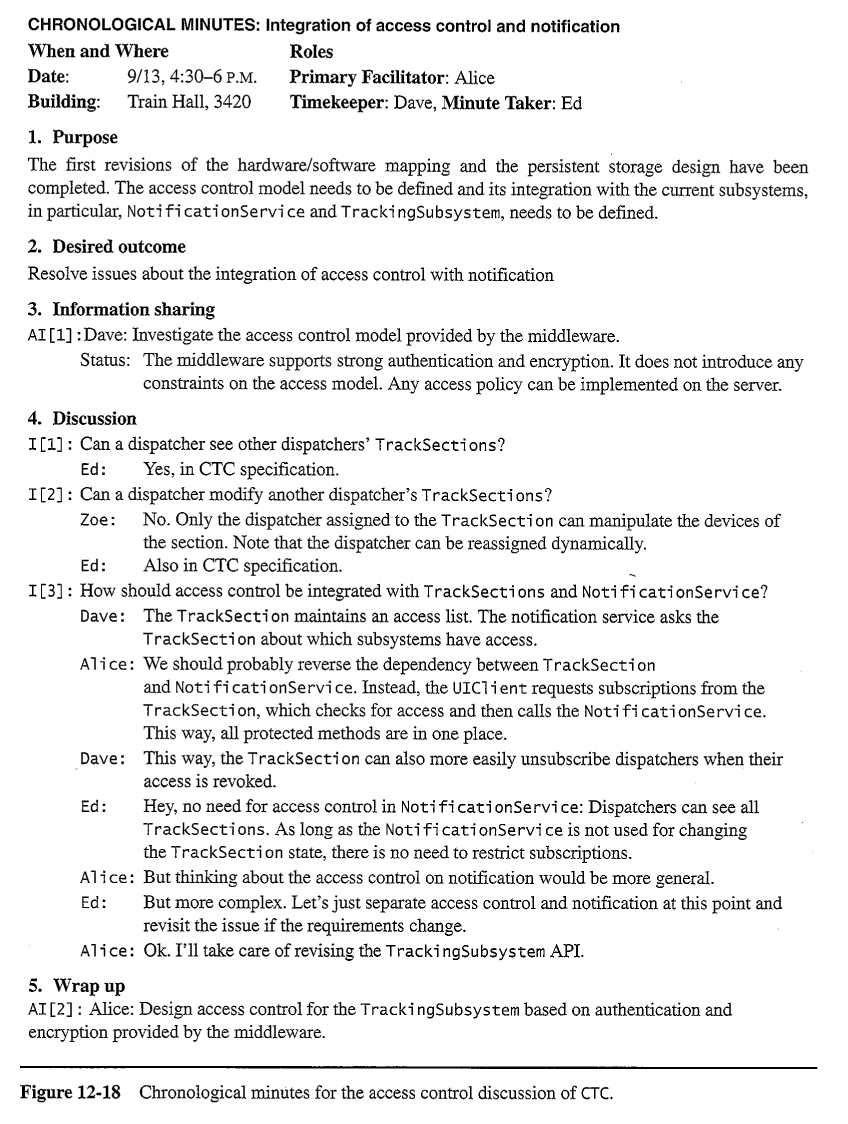
During the meeting three different proposals were presented and discussed, as shown here in the chronological minutes and in the following three design diagrams.
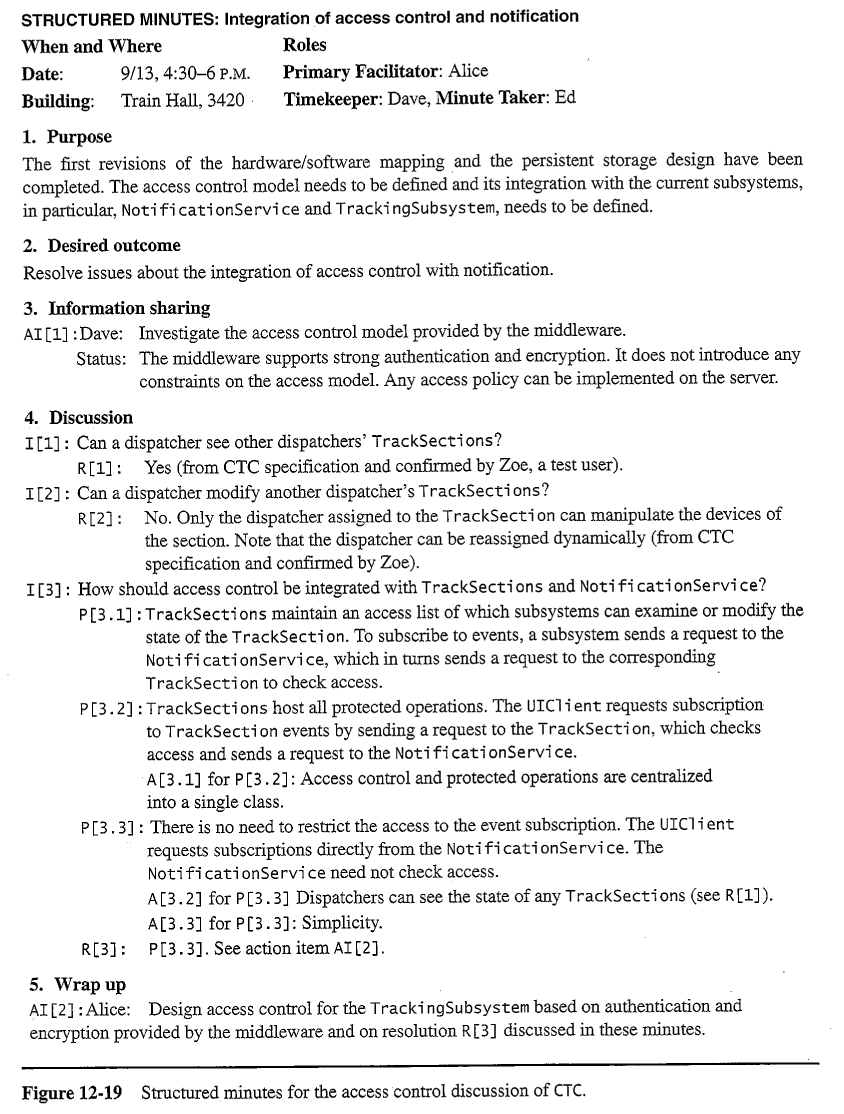
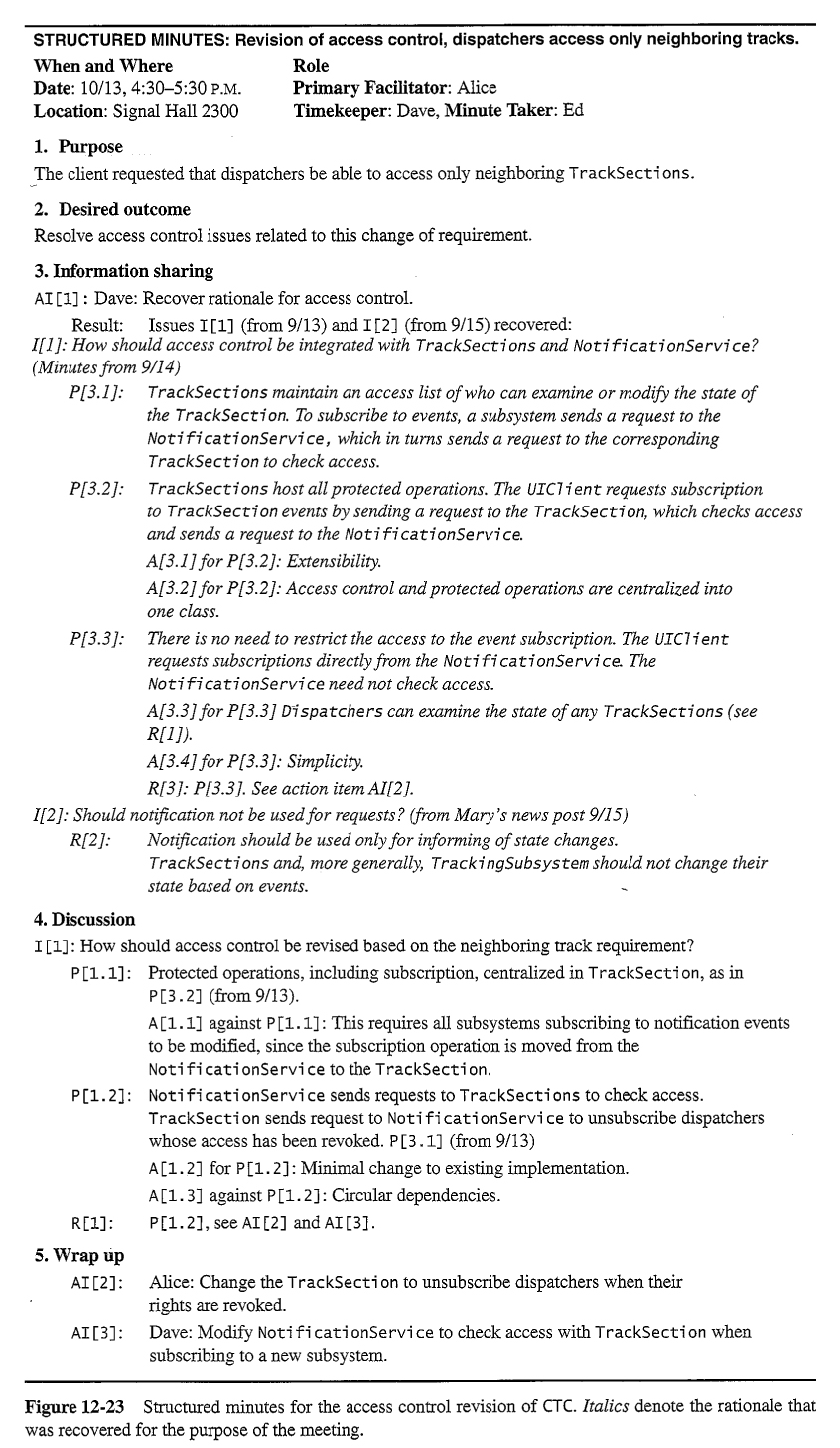
Structured minutes have the same information as the chronological meetings, but reorganized to make related items clearer to follow:
Capturing Rationale Asynchronously
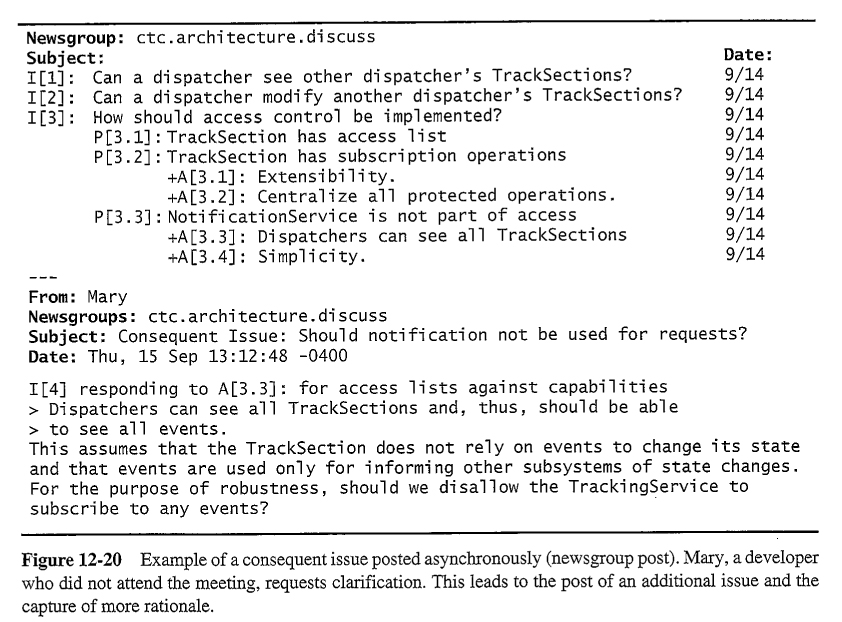
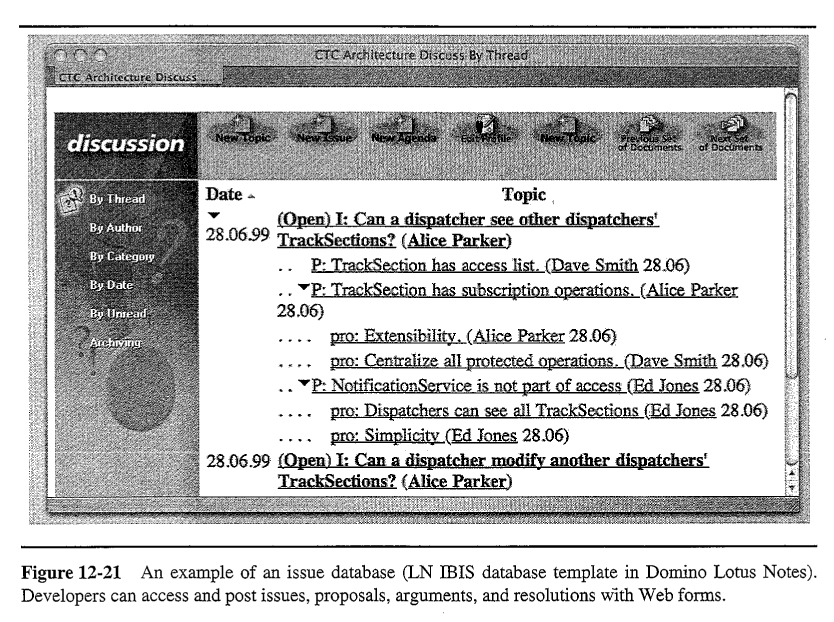
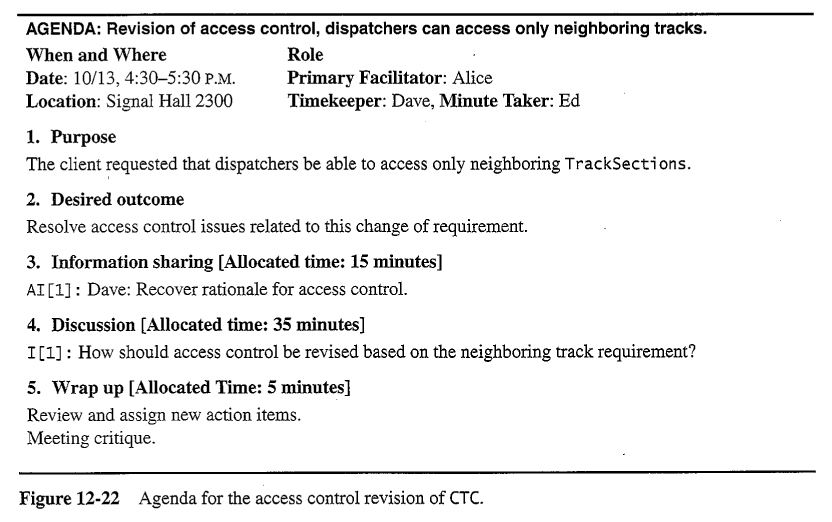
Capturing Rationale when Discussing Change
Reconstructing Rationale
Managing Rationale
A manager is responsible for the following activities with respect to rationale management.
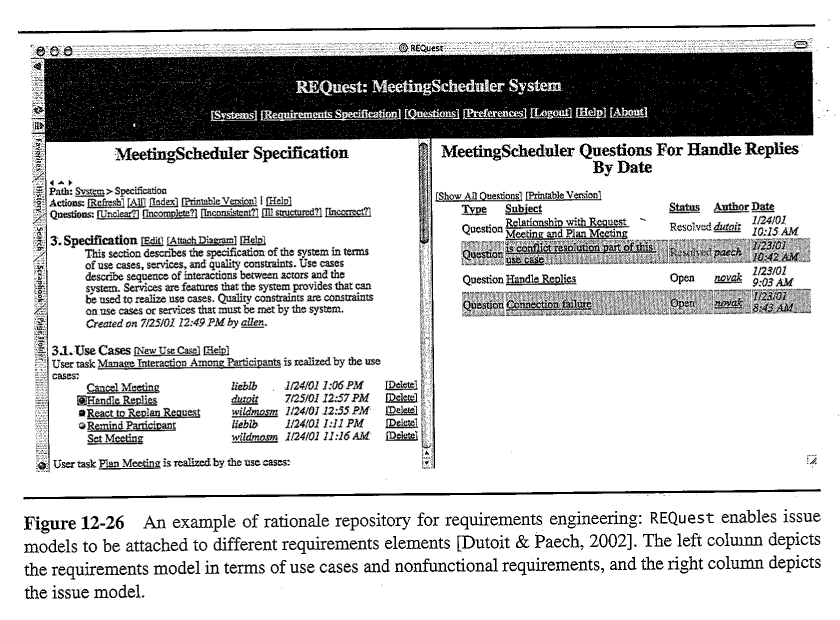
Documenting Rationale
Assigning Responsibilities
- Minute Taker
- Rationale Editor
- Reviewer
- Heuristics:
- One minute taker per team
- One rationale editor per project
- Increase number of reviewers after delivery. ( Reassign developers while rationale is still fresh in their heads. )
Heuristics for Communicating about Rationale
- Name issues consistently
- Centralize issues
- Cross-reference issues and system elements
- Manage change
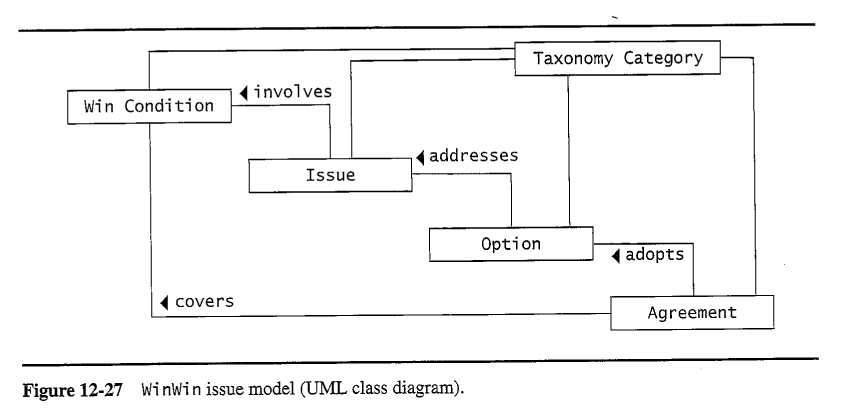
Issue Modeling and Negotiation
The Harvard method for negotiation tries to reduce antagonism by the following heuristics:
- Separate developers from proposals. A judgement about a proposal should not be seen as a judgement of the developer who made it.
- Focus on criteria, not proposals. Once everyone can agree on criteria, the criteria will determine the best proposal.
- Take into account all criteria, instead of maximizing a single one.
Conflict Resolution Strategies
Five Examples:
- Majority wins
- Owner has last word
- Management is always right
- Expert is always right
- Time decides
Configuration Management
References:
- Bernd Bruegge and Allen H. Dutoit, "Object-Oriented Software Engineering", Third Edition, Chapter 13
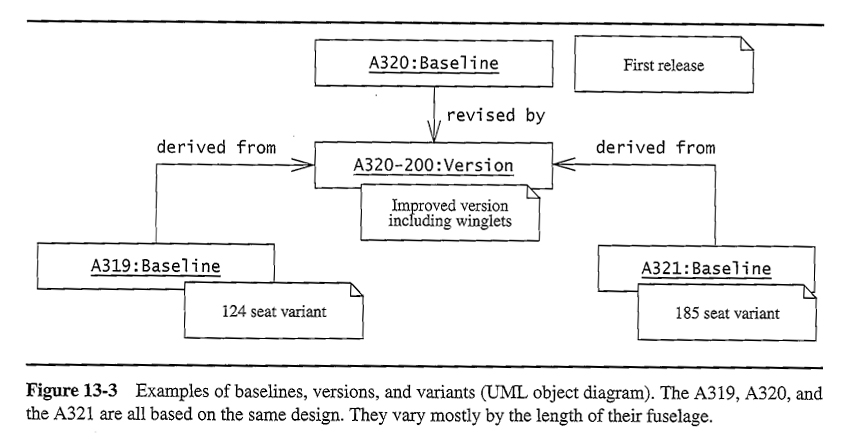
A lot of this section is based on a running example of an aircraft with multiple configurations, mostly differing by the length of their fuselage. The controls are "fly by wire", a.k.a. "virtual cockpit" or "virtual control panel", with the goal that each configuration fly the same way, to minimize cross training costs.
Configuration Management Concepts
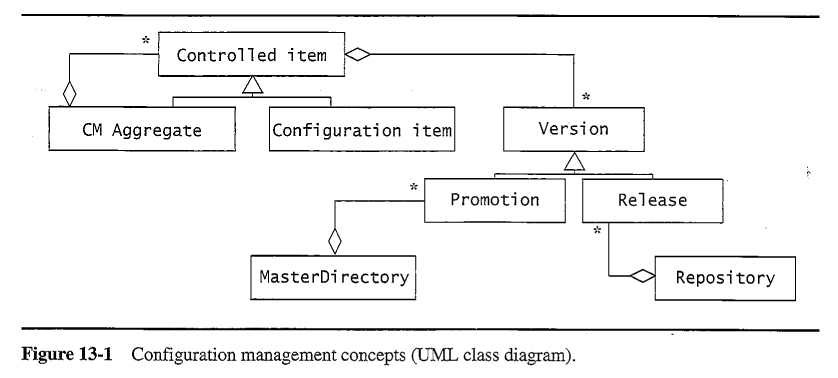
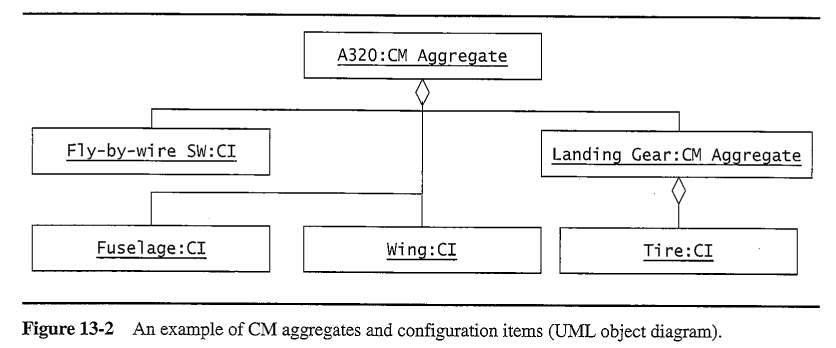
Configuration Items and CM Aggregates
Promotions and Releases
- Promotions are put forth by developers for use by other developers, but not released to the general public.
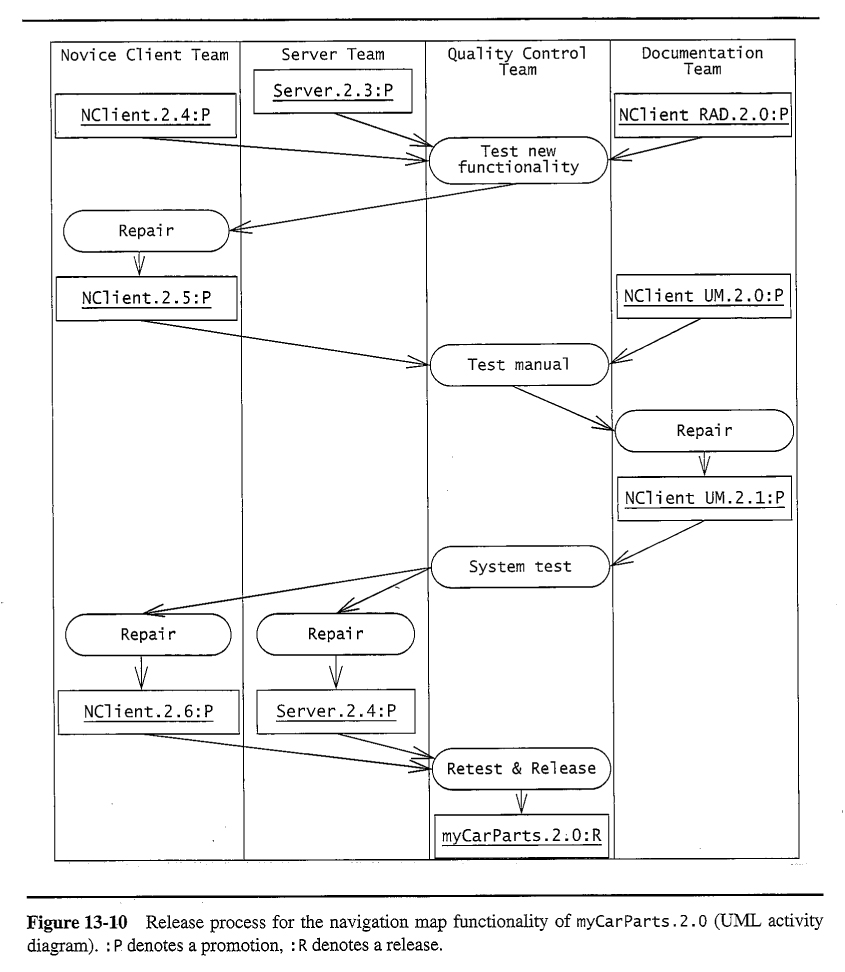
- Releases have been much more thoroughly tested, and are made available to clients.
Repositories and Workspaces
- Repositories are central storage locations where "the company" stores completed versions of artifacts.
- Workspaces refer to the working directories where individual programmers store the files they are currently working on.
Versions and Variants
- Versions are generally intended to replace earlier versions.
- Variants are intended to remain permanently different, "in parallel" to other variants.
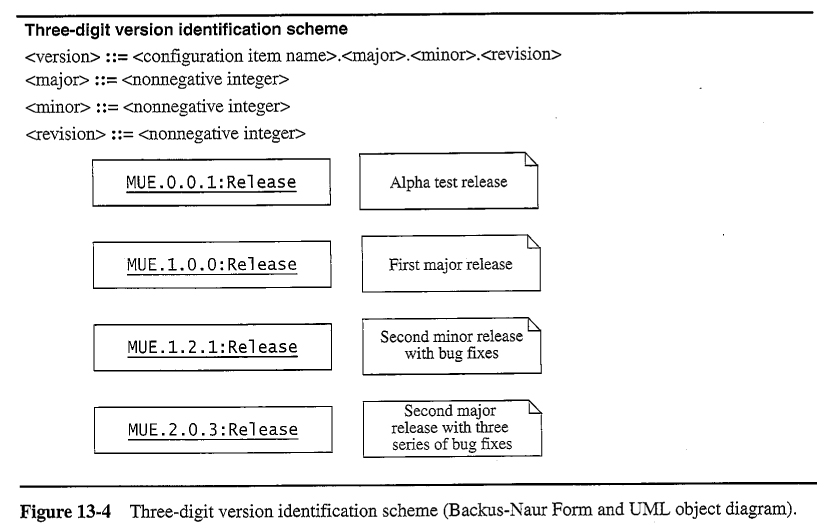
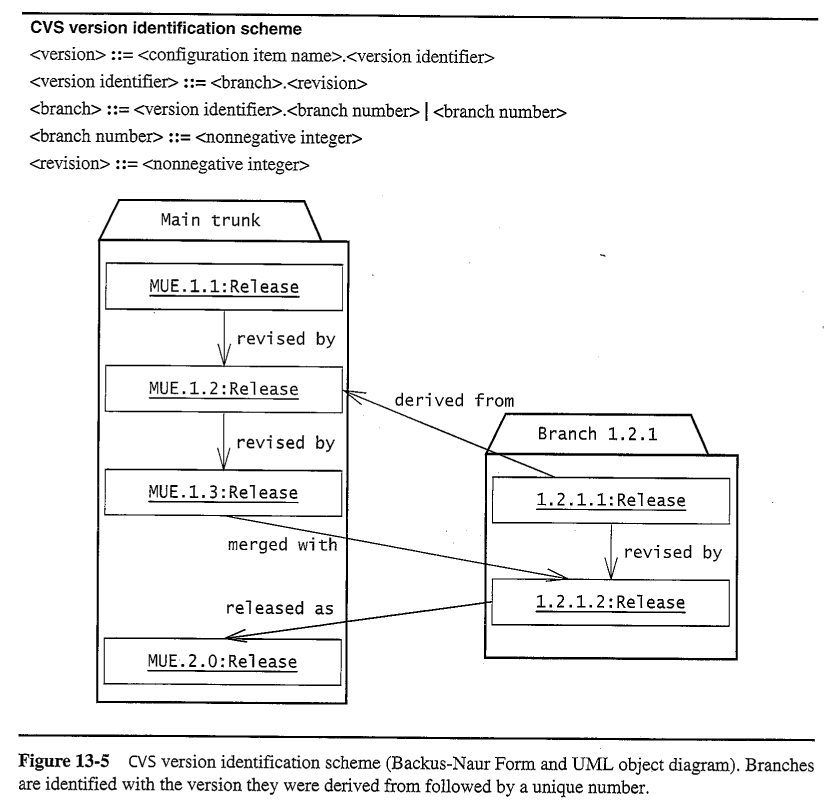
Version Identification Schemes
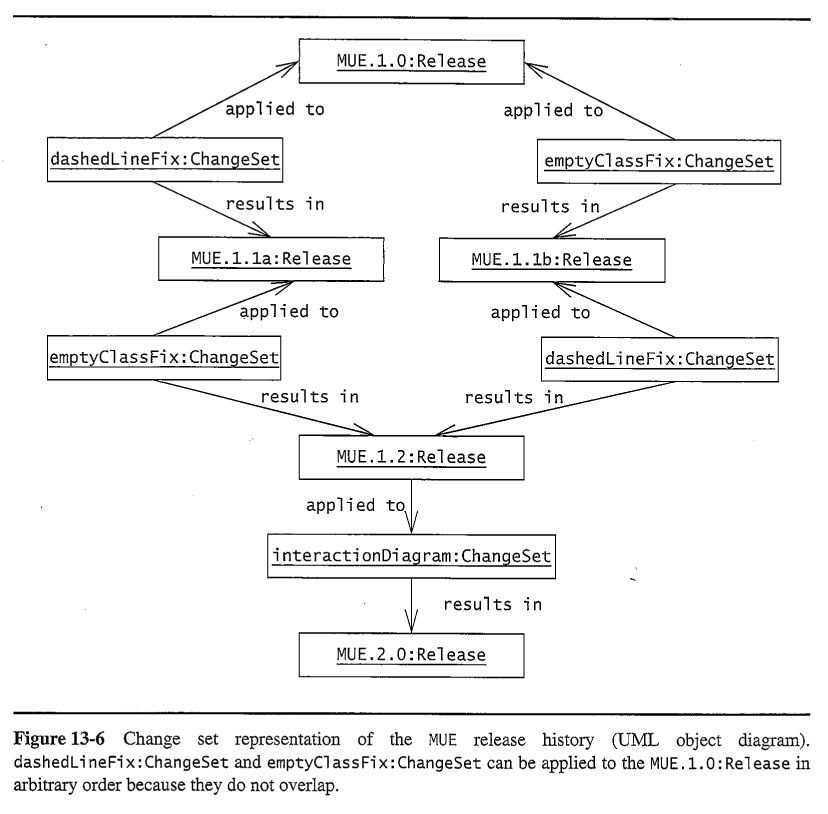
Changes and Change Sets
Configuration Management Tools
Configuration Management Activities
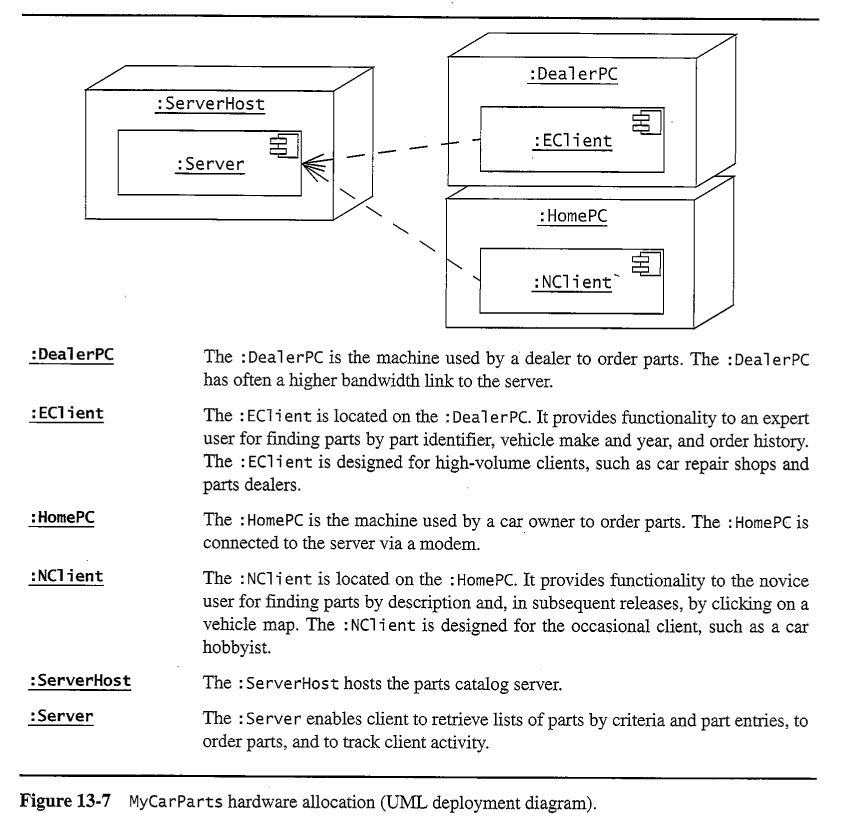
This running example is a tool for ordering parts from a parts dealer. Experts ( e.g. auto mechanics ) know exactly the parts they need, but novices ( e.g. laymen working on their own cars ) need more help and guidance.
Configuration Item and CM Aggregate Identification
Note that some items can be part of more than one aggregate.
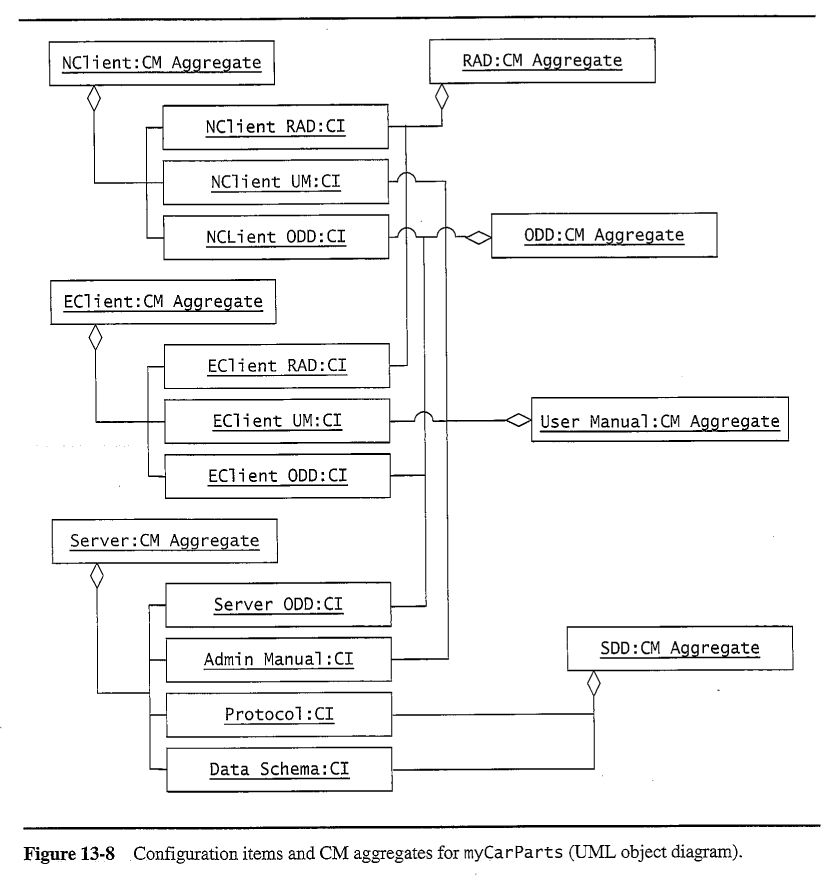
( Source code, Test Materials, and Testing Manual omitted for brevity. )
Promotion Management
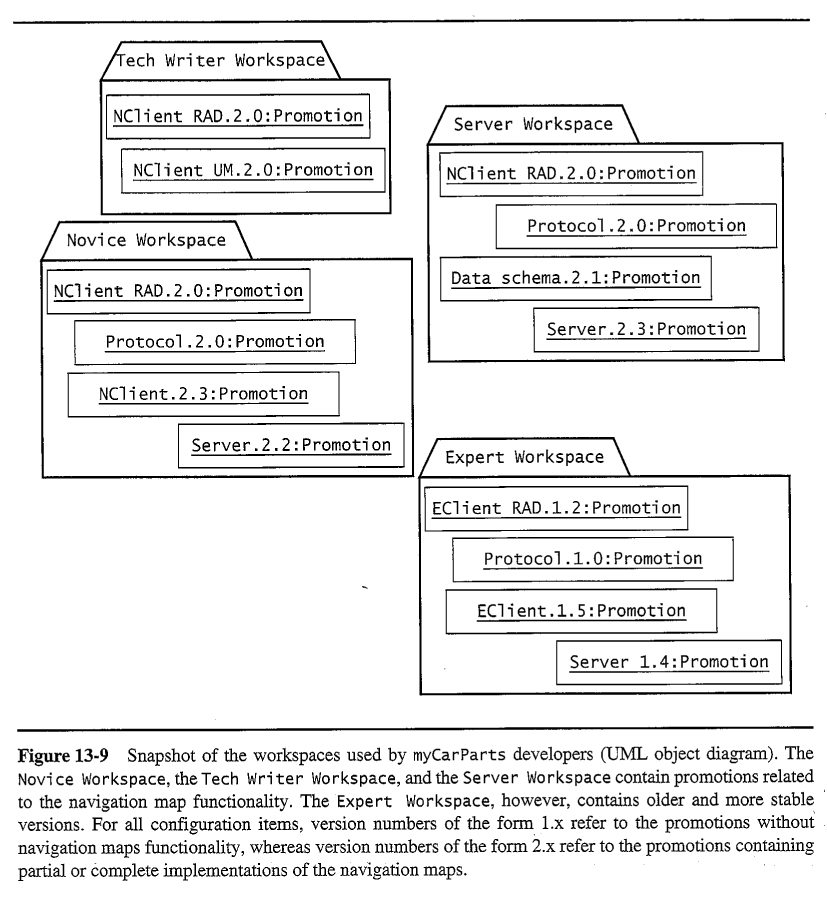
Different workspaces may have different versions of some items. Typically an older more stable version of code that other groups are developing, and the latest code under development for the code that this group is currently working on.
Release Management
Branch Management
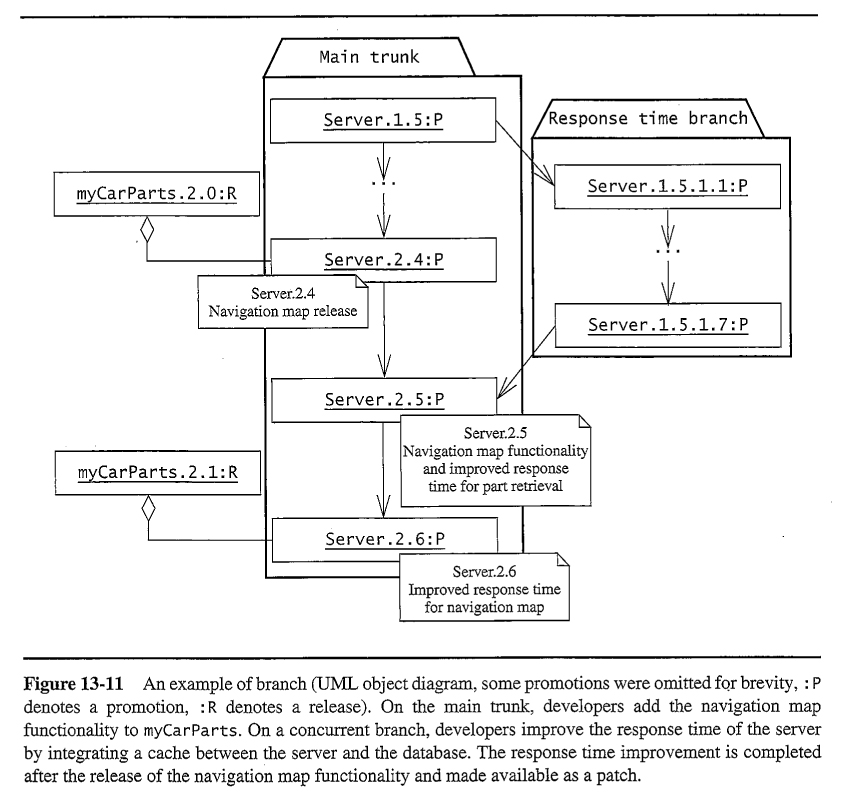
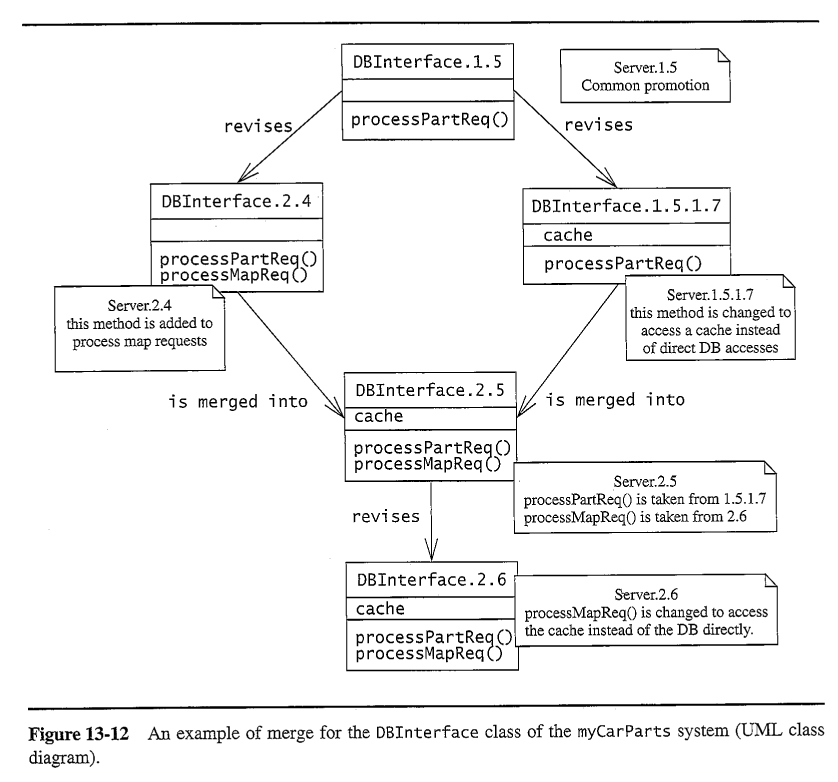
- Most branches are temporary, with the intention of merging them back into the main branch once they are completed and tested.
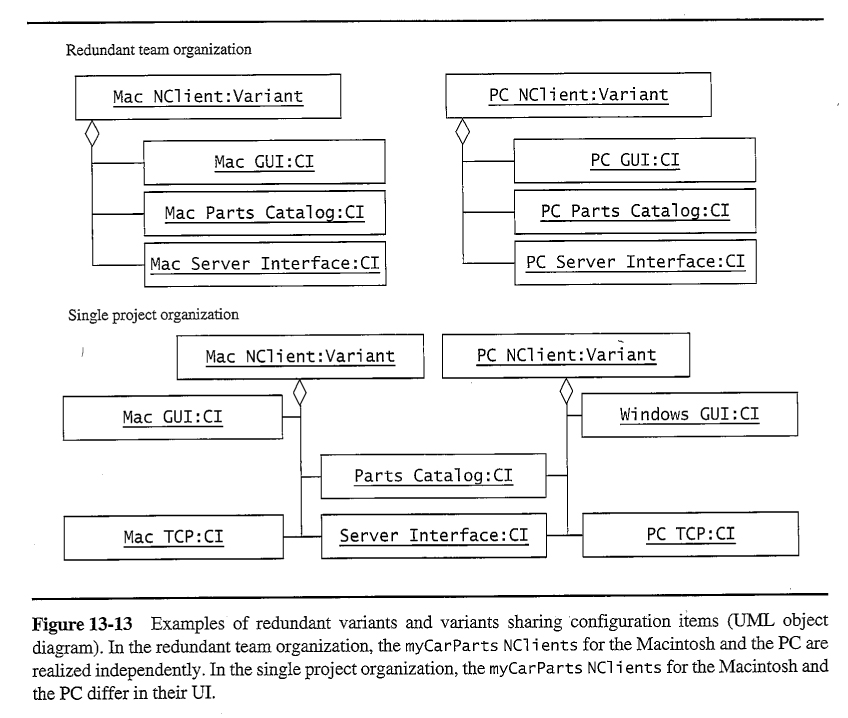
Variant Management
- Variants are intended to remain permanently separated, which raises different issues.
Change Management
Managing Configuration Management
A manager is responsible for the following activities with respect to configuration management.
Documenting Configuration Management
Assigning Configuration Management Responsibilities
Planning Configuration Management Activities
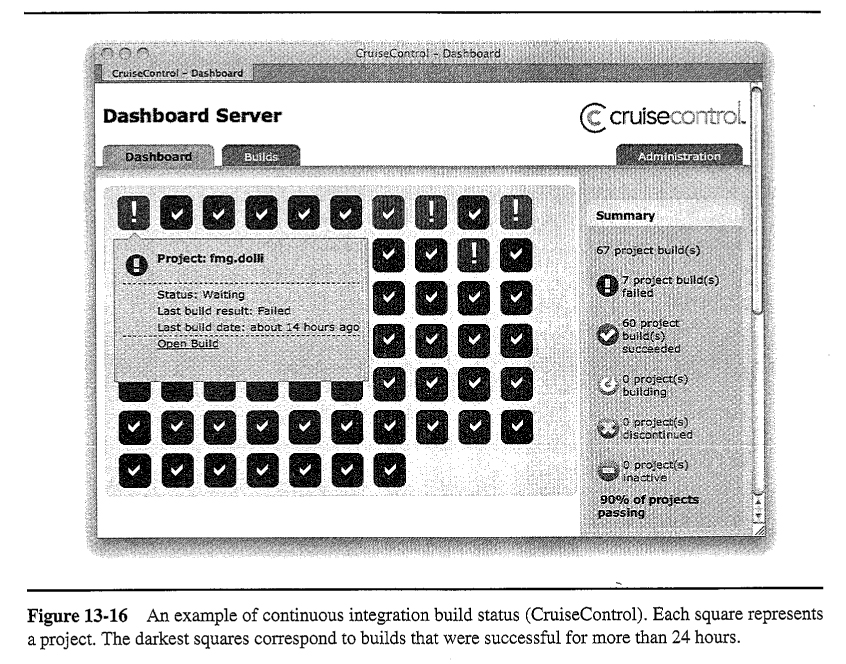
Continuous Integration: Testing and Promotion Management
Project Management
References:
- Bernd Bruegge and Allen H. Dutoit, "Object-Oriented Software Engineering", Third Edition, Chapter 14
An Overview of Project Management
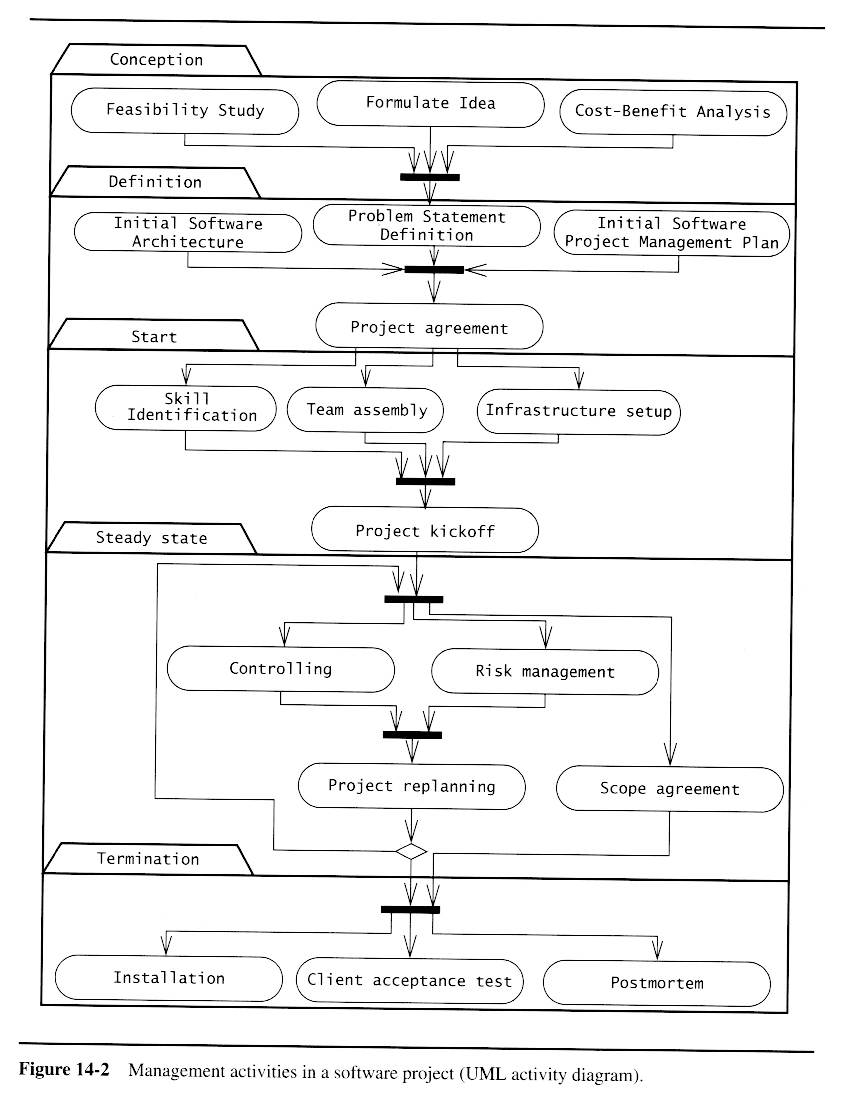
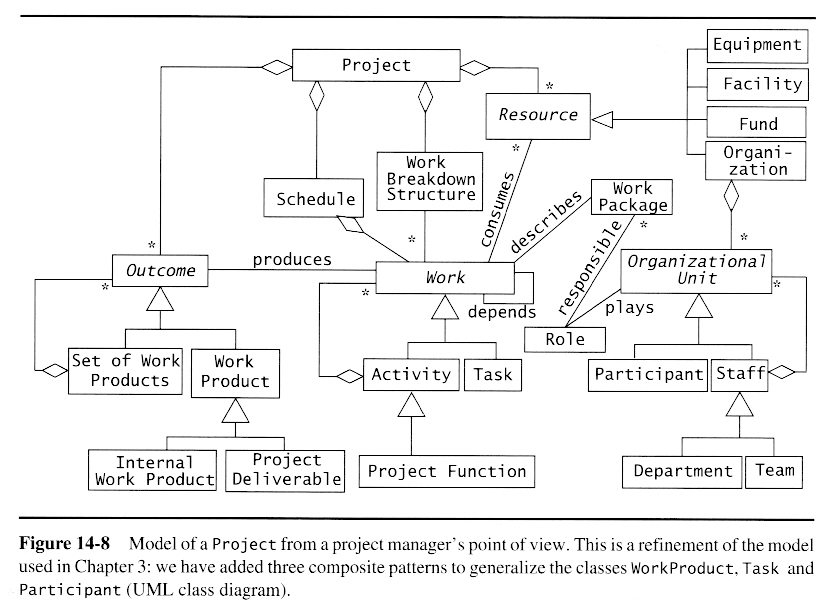
Project Management Concepts
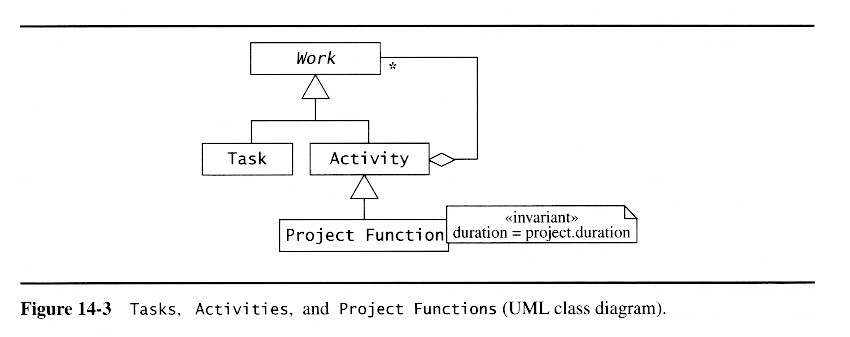
Tasks and Activities

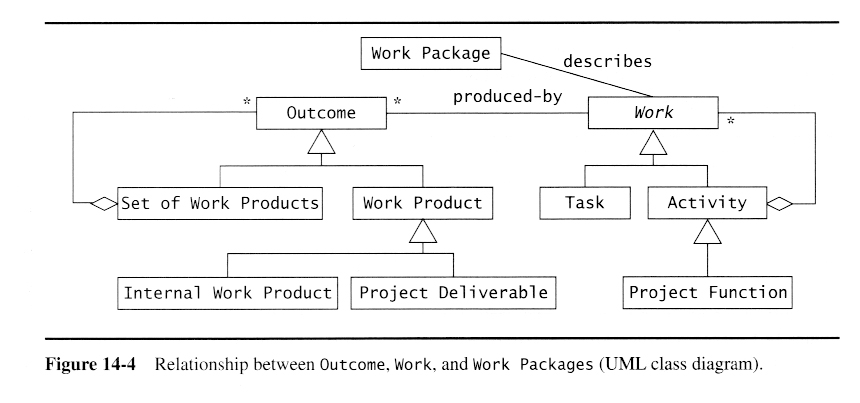
Work Products, Work Packages, and Roles
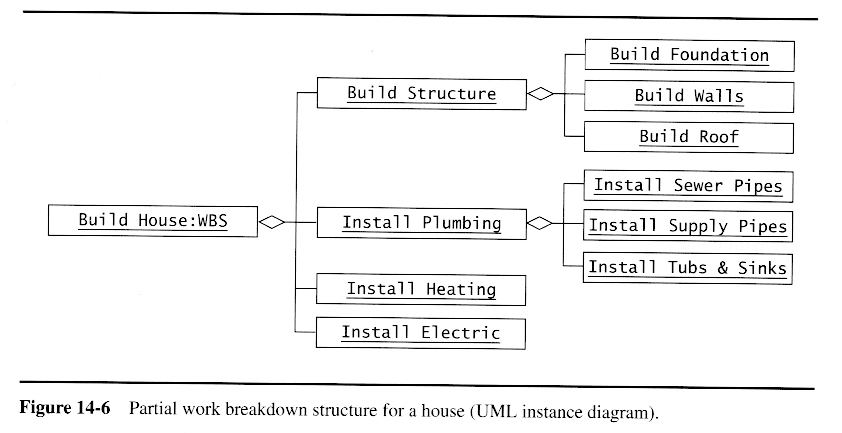
Work Breakdown Structure, WBS

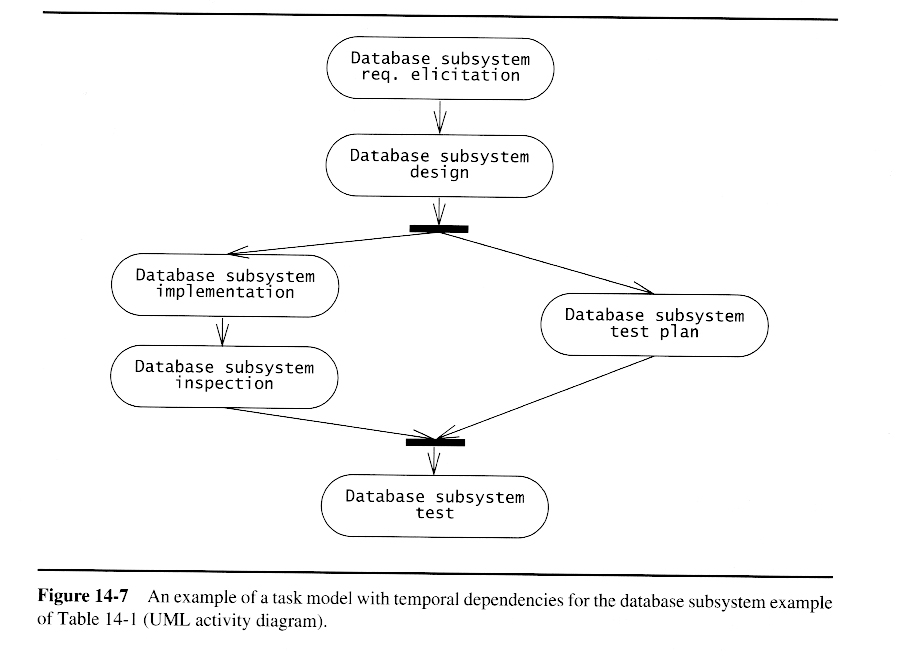
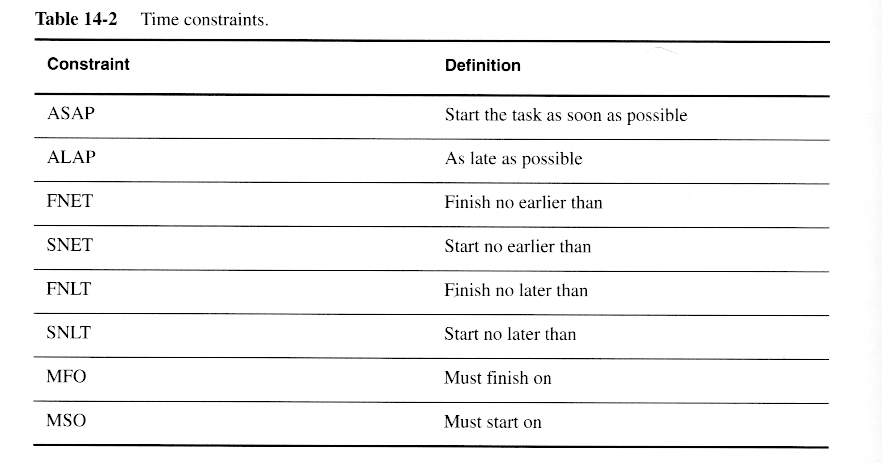
Task Model
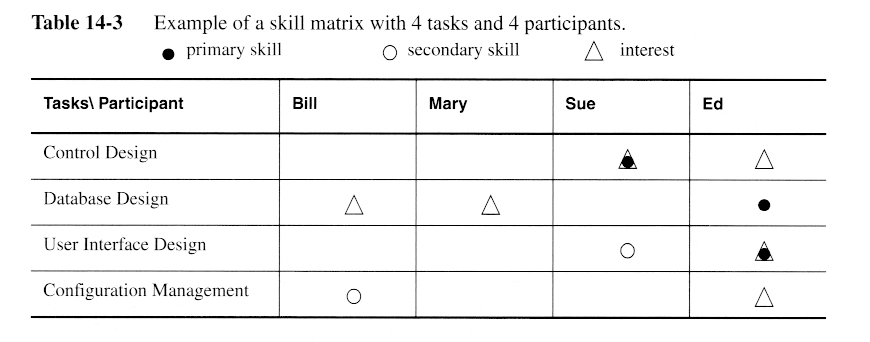
Skill Matrix
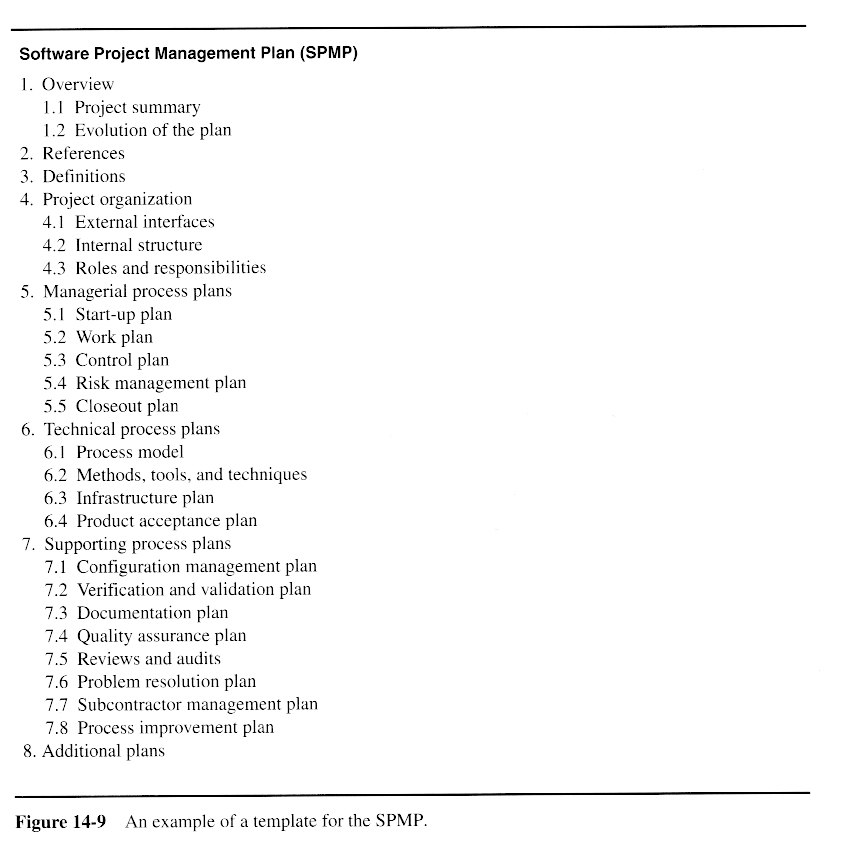
The Software Project Management Plan
Classical Project Management Activities
Planning the Project

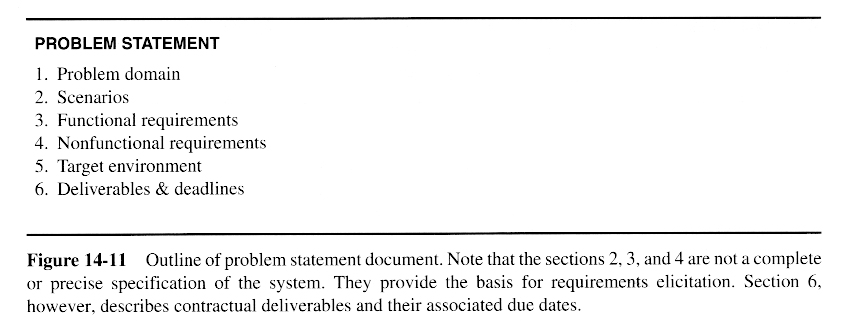
Developing the problem statement
Defining the top-level design
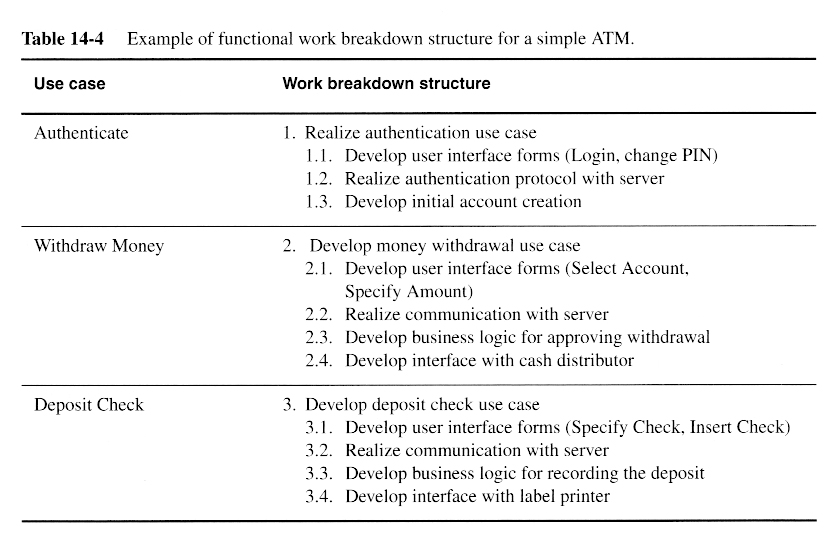
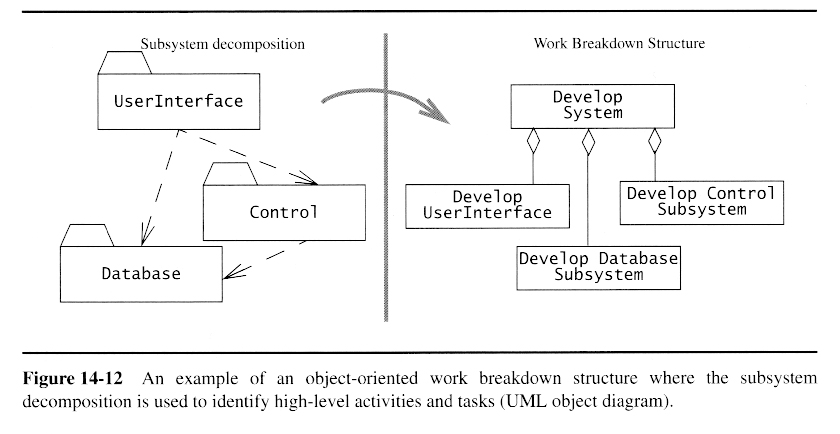
Identifying the work breakdown structure
Creating the initial schedule
Organizing the Project
Setting up the communication infrastructure
Identifying skills
Assigning management roles
Assigning technical roles
Dealing with skill shortages
Selecting team sizes
Assembling the teams
Kick-off meeting
Agreeing on project scope
Controlling the Project
Meetings
Metrics
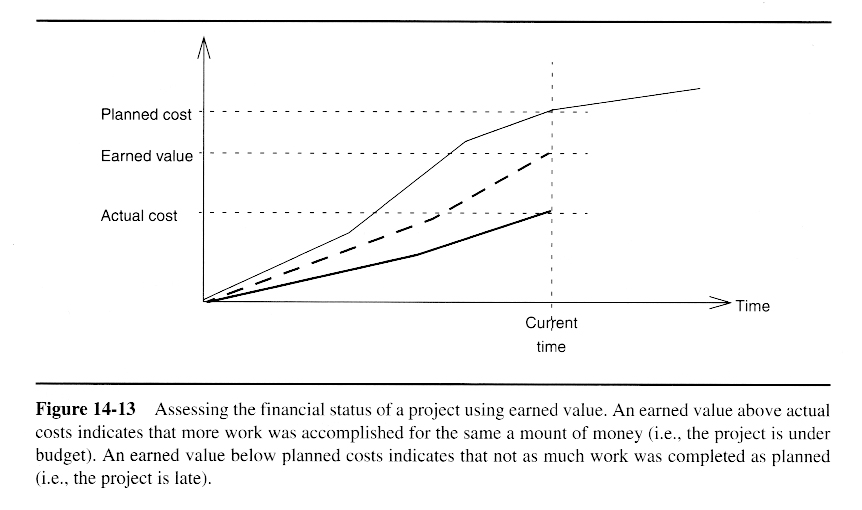
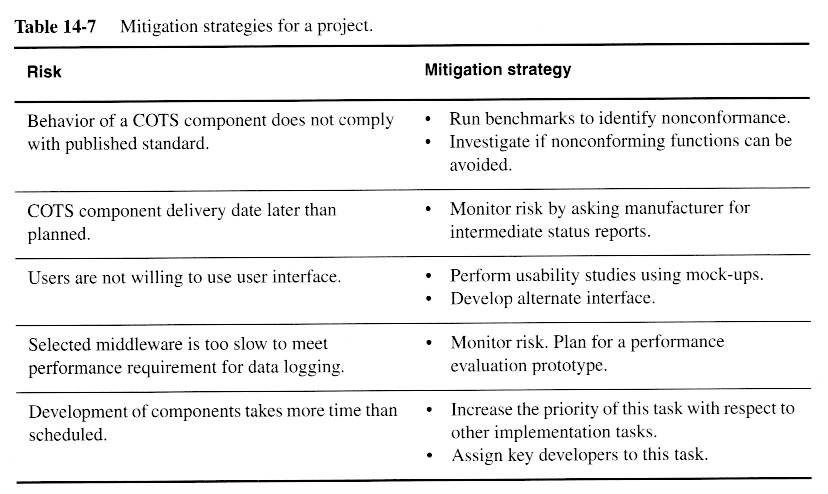
Managing risk
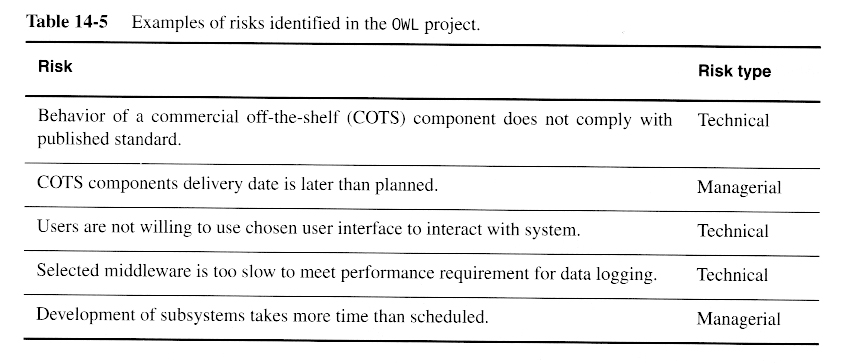
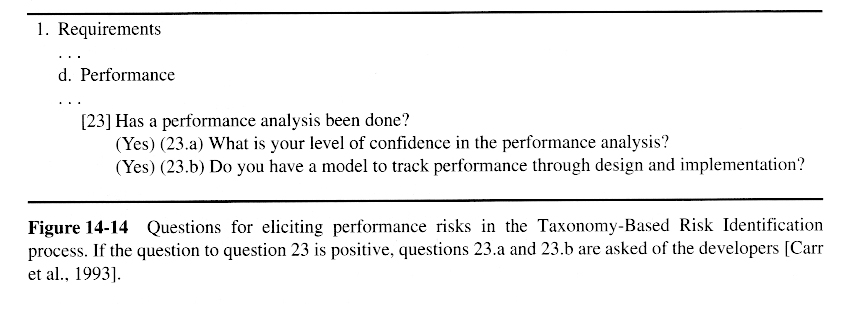
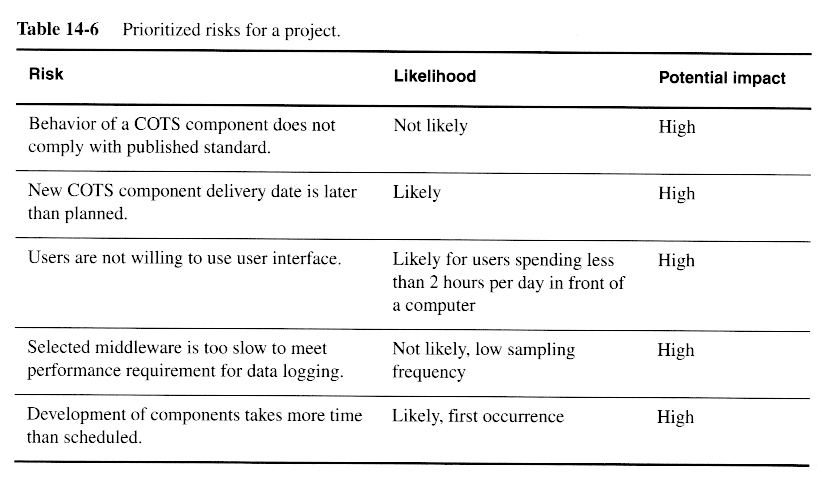
14.4.4 - Terminating the Project
Accepting the system
Installation
Postmortem
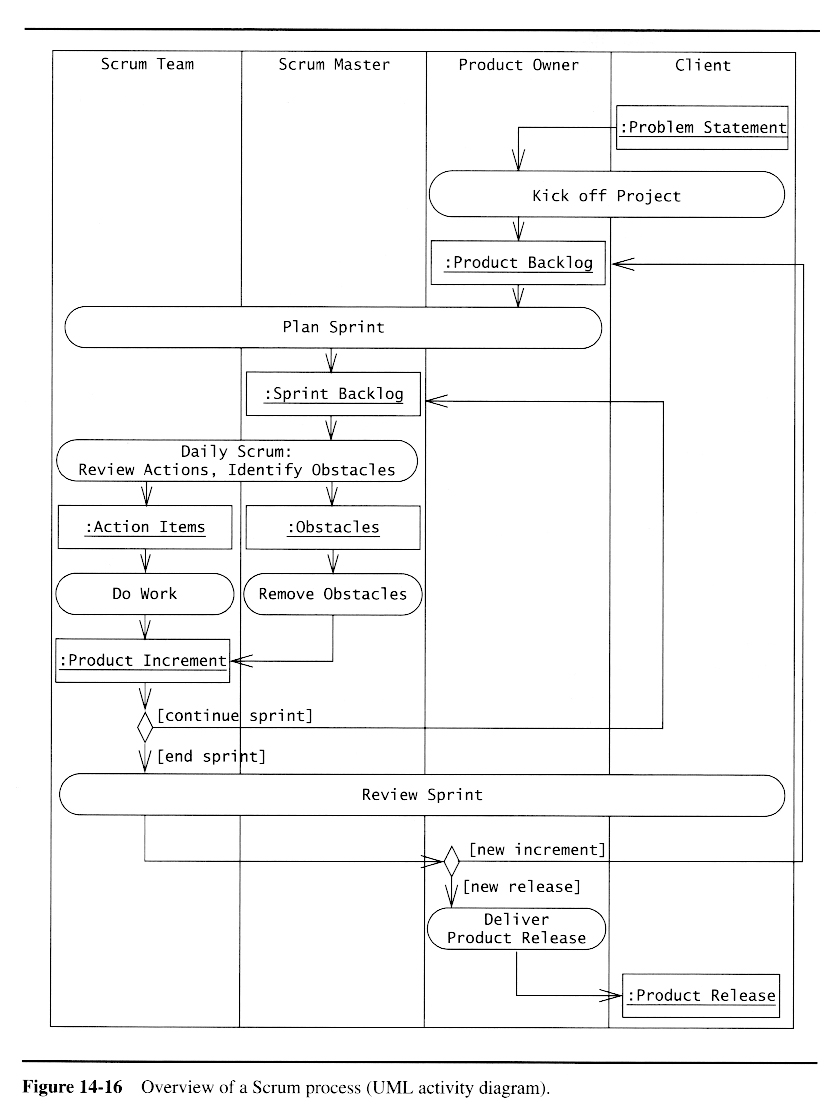
14.5 - Agile Project Management Activities
14.5.1 - Planning the Project: Create Product and Sprint Backlogs
14.5.2 - Organizing the Project
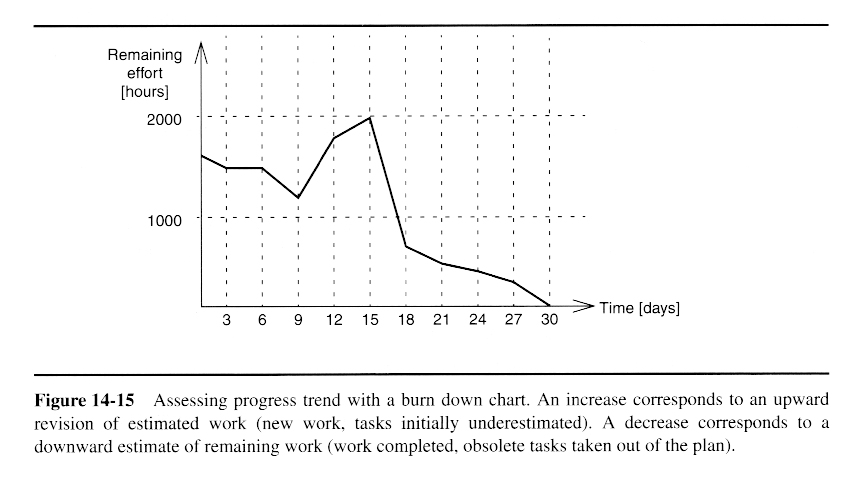
14.5.3 - Controlling the Project: Daily Scrums and Burn Down Charts
14.5.4 - Terminating the Project: Sprint Reviews